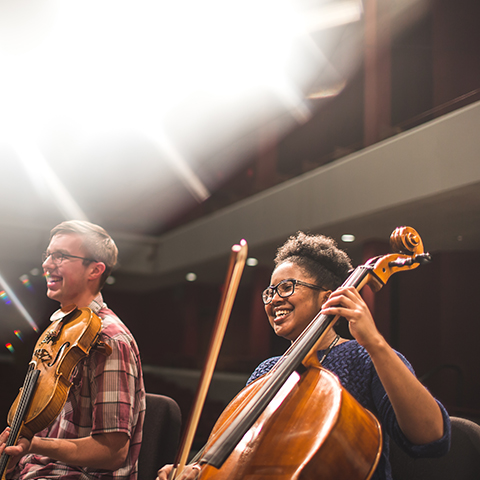
Music at Austin Peay brings unique musical experiences to our students.
Our students perform in dynamic ensembles, create engaging outreach programs, and work closely with faculty in personalized classroom and studio instruction. We value
the potential and individuality of each student, and our faculty build relationships and provide mentorship both in and outside of the classroom/studio. Our graduates find great success in music and related careers, and are accepted into graduate schools of their choosing. Come visit us to see how you fit into our vibrant and exciting music department.
Set up an audition Schedule a visit Request information Concerts and Events
APSU's Wind Ensemble was selected to perform at the 2026 College Band Directors National Association Southern Division Conference in Tampa, Florida.
Follow us on Facebook for more!
From howler monkey wake-up calls to "musical diplomacy" in remote mountain schools, the Aurum Sonor Brass Quintet’s 10-day trek through Costa Rica was anything but a standard concert tour.
Music Degree Programs
We offer nine undergraduate concentrations, six graduate concentrations, two minors, and a graduate certificate to prepare you for every avenue of professional musicianship.
Undergraduate Concentrations
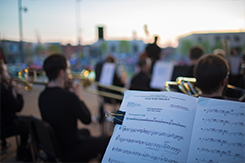
This concentration prepares students for careers in composition, conducting, arranging,
music theory, pedagogy, arts management, and more. Composers also teach theory and
composition in colleges, universities, and private studios. This degree will prepare
you for any number of these or other music careers.
Learn more about Composition
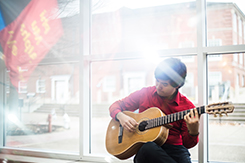
This concentration prepares students for careers in symphony orchestras, opera houses,
musical theatres, jazz clubs, recording studios, theme parks, cruise ships, touring
companies, military ensembles, chamber ensembles, and as soloists. Many performers
also spend much of their time teaching private lessons in local schools, private studios,
music stores, or at the college level. Many performance majors pursue graduate degrees
or careers in conducting, composing, arranging, music theory, pedagogy, or arts management.
This degree will prepare you for any number of these or other music careers.
Learn more about Guitar Performance
This concentration prepares students for careers in symphony orchestras, opera houses,
musical theatres, jazz clubs, recording studios, theme parks, cruise ships, touring
companies, military ensembles, chamber ensembles, and soloist. Many performers also
spend much of their time teaching private lessons in local schools, private studios,
music stores, or at the college level. Performance majors pursue graduate degrees
or careers in conducting, composing, arranging, music theory, pedagogy, or arts management.
This degree will prepare you for any number of these music careers.
Learn more about Instrumental Performance
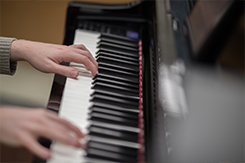
This concentration prepares students for careers in symphony orchestras, opera houses,
musical theatres, jazz clubs, recording studios, theme parks, cruise ships, touring
companies, military ensembles, chamber ensembles, and as soloists. Many performers
also spend much of their time teaching private lessons in local schools, private studios,
music stores, or at the college level. Performance majors can pursue graduate degrees
or careers in conducting, composing, arranging, music theory, pedagogy, or arts management.
This degree will prepare you for any number of these music careers.
Learn more about Keyboard Performance

This concentration prepares students for careers in symphony orchestras, opera houses,
musical theatres, jazz clubs, recording studios, theme parks, cruise ships, touring
companies, military ensembles, chamber ensembles, and as soloists. Many performers
also spend much of their time teaching private lessons in local schools, private studios,
music stores, or at the college level. Many performance majors pursue graduate degrees
or careers in conducting, composing, arranging, music theory, pedagogy, or arts management.
This degree will prepare you for any number of these music careers.
Learn more about Vocal Performance
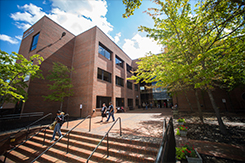
The Bachelor of Science (B.S.) and Bachelor of Arts (B.A.) are liberal studies degrees
that prepare students for a wide array of careers and allow students to select from
a broad spectrum of courses that suit their goals and interests. This concentration
requires a minor in another area that students select with the help of their academic
advisor. The minor provides additional skills and content that may not be offered
in a music course but are essential for some music-related careers.
Learn more about Liberal Studies
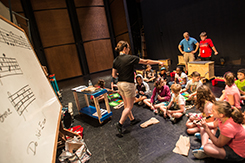
Music teachers are both professional educators and professional musicians. As such,
your course work will prepare you to excel as both an educator and a vocalist. Music
education courses begin in the sophomore year and conclude with a semester of student
teaching. You will also take a group of teacher-preparation courses from the College
of Education that prepare you to become a state-certified teacher.
Learn more about Music Education - Choral

Music teachers are both professional educators and professional musicians. As such,
your course work will prepare you to excel as both an educator and an instrumentalist.
Music education courses begin in the sophomore year and conclude with a semester of
student teaching. You will also take a group of teacher-preparation courses from the
College of Education that prepare you to become a state-certified teacher.
Learn more about Music Education - Instrumental
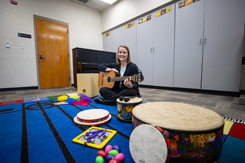
Music therapists use music as a therapeutic tool to address motor, communication, cognitive, social, and/or emotional needs. Music therapists work with clients across the lifespan in school, hospitals, mental health agencies, nursing and rehabilitation centers, or private practice. This is a rapidly growing field and APSU is one of only three schools in Tennessee to offer a concentration in music therapy!
Graduate Concentrations
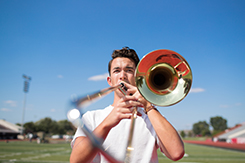
This one-year program is designed for post-baccalaureate music students who wish to
concentrate primarily on their performance skills as they are prepare for entry into
masters programs, competitions, auditions, or performing positions without being enrolled
in a degree program. The program focuses almost exclusively on developing performance
skills through private instruction, collaborative and ensemble performances, and solo
recitals.
Learn more about Peformance Certificate

This concentration is designed to meet the needs of musicians seeking to focus on
performance. Some choose this concentration simply to improve their skills as teachers
and performers while others use the program to prepare for doctoral study in performance.
Learn more about Vocal Performance
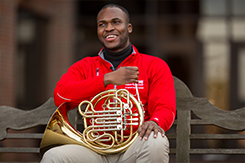
This concentration is designed to meet the needs of musicians seeking to focus on
performance. Some choose this concentration simply to improve their skills as teachers
and performers while others use the program to prepare for doctoral study in performance.
Learn more about Instrumental Performance
The Collaborative Piano concentration develops the skill of collaborative work with
vocalists and instrumentalists in large and small ensembles and with soloists. Some
choose this concentration to develop skills in working with other musicians.
Learn more about Collaborative Piano
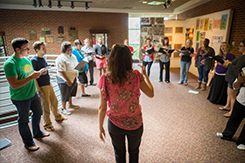
This concentration is designed to meet the needs of musicians seeking to focus on
choral conducting. Some choose this specialization simply to improve their skills
as teachers and conductors while others use the program to prepare for doctoral study
in choral conducting. Students will be required to do a conducting audition on campus
with a student ensemble.
Learn more about Choral Conducting
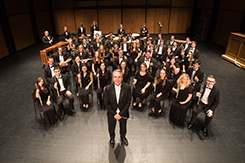
This concentration is designed to meet the needs of musicians seeking to focus on
instrumental conducting. Some choose this specialization simply to improve their skills
as teachers and conductors while others use the program to prepare for doctoral study
in instrumental conducting. Students will be required to do a conducting audition
on campus with a student ensemble.
Learn more about Instrumental Conducting

The Department of Music seeks to fulfill its mission by providing training and experience
for students preparing for careers in music performance, providing training toward
the development of critical thinking in music, providing music training and teaching
experience for students seeking licensure in education to help meet the need for competent
music teachers in the state and region, and providing education resources and musical
experiences as part of a comprehensive Liberal Arts education.
Learn more about Music Education
What Do Music Majors Do After Graduation?
- Performance
- Music Education
- Pedagogy
- Theory and Composition
- Musicology and Ethnomusicology
- Worship or Sacred Music
- Music Therapy
- Music Business
- Music Technology
- Conducting
- Instrument Repair
- Music Librarian
Visit our Music Careers Website for more information.
Admission is via audition and/or portfolio review and interview. Begin the application process now by setting up an audition date.


